IN THIS BULLETIN...
We begin with a quote that explains what it means to be a Rotarian. This passage was sent in by Ruth Thatcher:
"A Rotarian is someone who, through their efforts digs wells from which they will never drink; restores eyesight for those they will never see; builds houses they will never live in; vaccinates children they will never meet; plants trees they will never sit under; educates children they will never know; feeds hungry people, regardless of colour, race, or politics; knows real happiness."
Given the times we are in, these words resonate with truth and hold even more meaning. Thank you Ruth for sharing this with us.
Our meeting on Friday, January 31st, began with the National Anthem. President Martin then said a few words about the tragic plane crash in Washington DC. President Martin actually had a friend who moved to the Washington area so that his daughter could pursue professional figure skating. When President Martin found out that the passenger plane had a team of figure skaters on it, he reached out to this friend. Fortunately, neither of them were on the plane. What it shows, however, is how interconnected we all are. President Martin then held a toast to life and our appreciation for it.
Following our toast, President Martin announced birthdays and anniversaries. The day before our meeting was Crista Renner's birthday. As she walked into the room, our club sang happy birthday to her.
Helmuth Slisarenko then announced our guests. And held a short quiz on the Rotary Magazine. The question he asked was who our International President is. Marva Wisdom answered: Stephanie Urchick. Helmuth followed up by asking where she was from. After several incorrect guesses he told us that she is ethnically Serbian but was born in Pennsylvania. Once again highlighting the interconnectivity of our world.
Marva and Crista discussed how they are attending Rotary's international peace summit in Istanbul on behalf of our club. At each table they placed small journals where each of us could write questions so that they may find answers to them while there.
Tracey Curtis announced that the Guelph General Hospital honoured Bob Ireland for his years of philanthropy on their behalf. Bob and his family were able to attend together.
Noma Vales discussed her initiative to raise funds for young Rotarians to attend the Rotary International Convention in Calgary. Rotarians can choose to donate directly, or they can host dinners where the attendees pay $35 towards this initiative. If you're interested, please contact Noma.
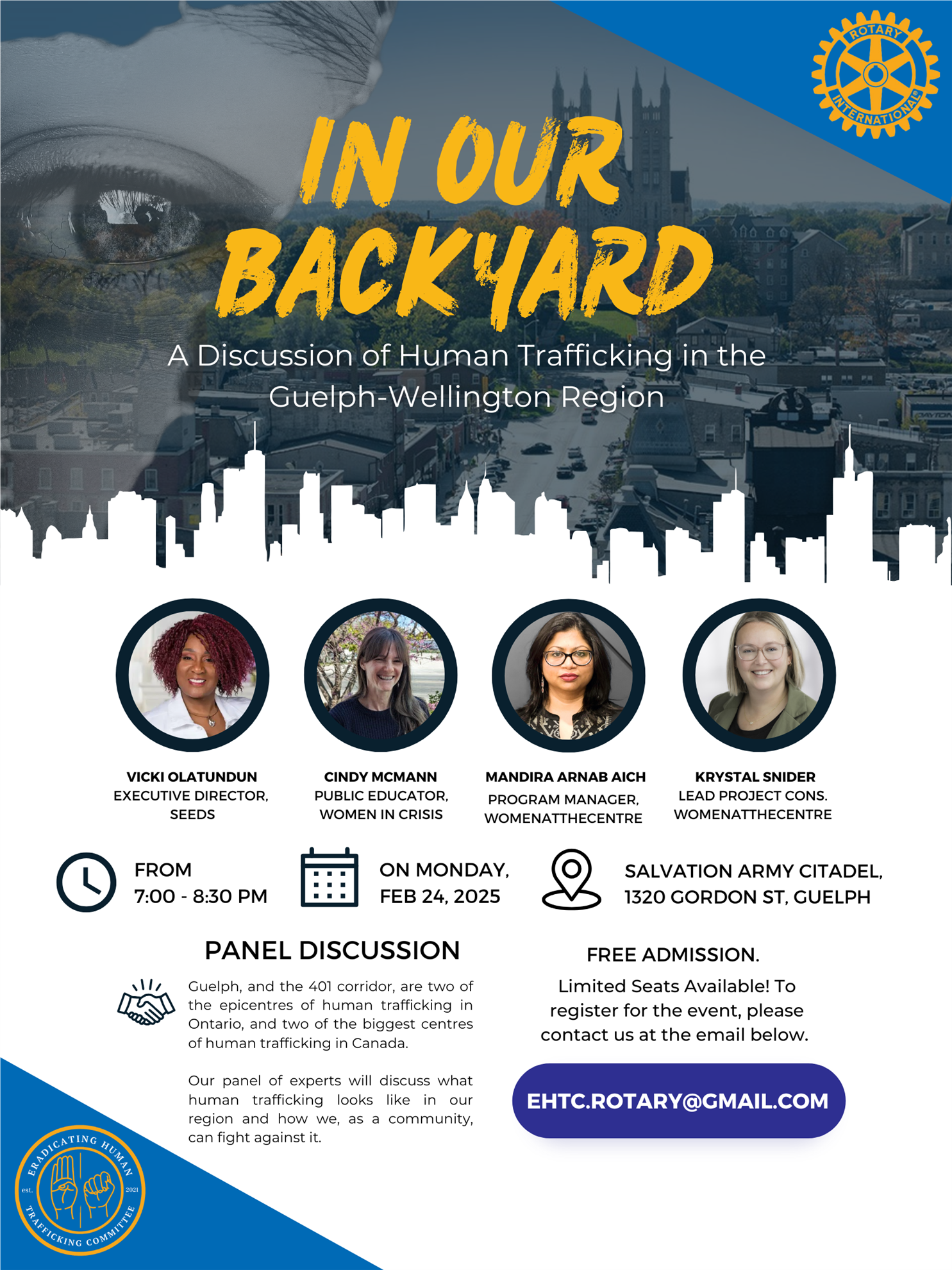
Aidan Harris made an announcement about the Eradicating Human Trafficking Committee's (EHTC) upcoming panel discussion. The event will take place on February 24th, 7:00 - 8:30PM, at the Salvation Army Church. It is set to be an informative discussion of what human trafficking looks like in the Guelph-Wellington region and how we, as a community, can come together to fight against it.
Matt Webster had a happy buck. He was at the Guelph General Hospital and, at the Dialysis Clinic, saw a sign that said it was funded by Rotary. This is yet another example of the impact our club has had on our community.
Lastly, Jules Croskill announced that the International Committee is having its first meeting on Wednesday, February 5th, at Luisa's house.
After announcements, lunch was served.
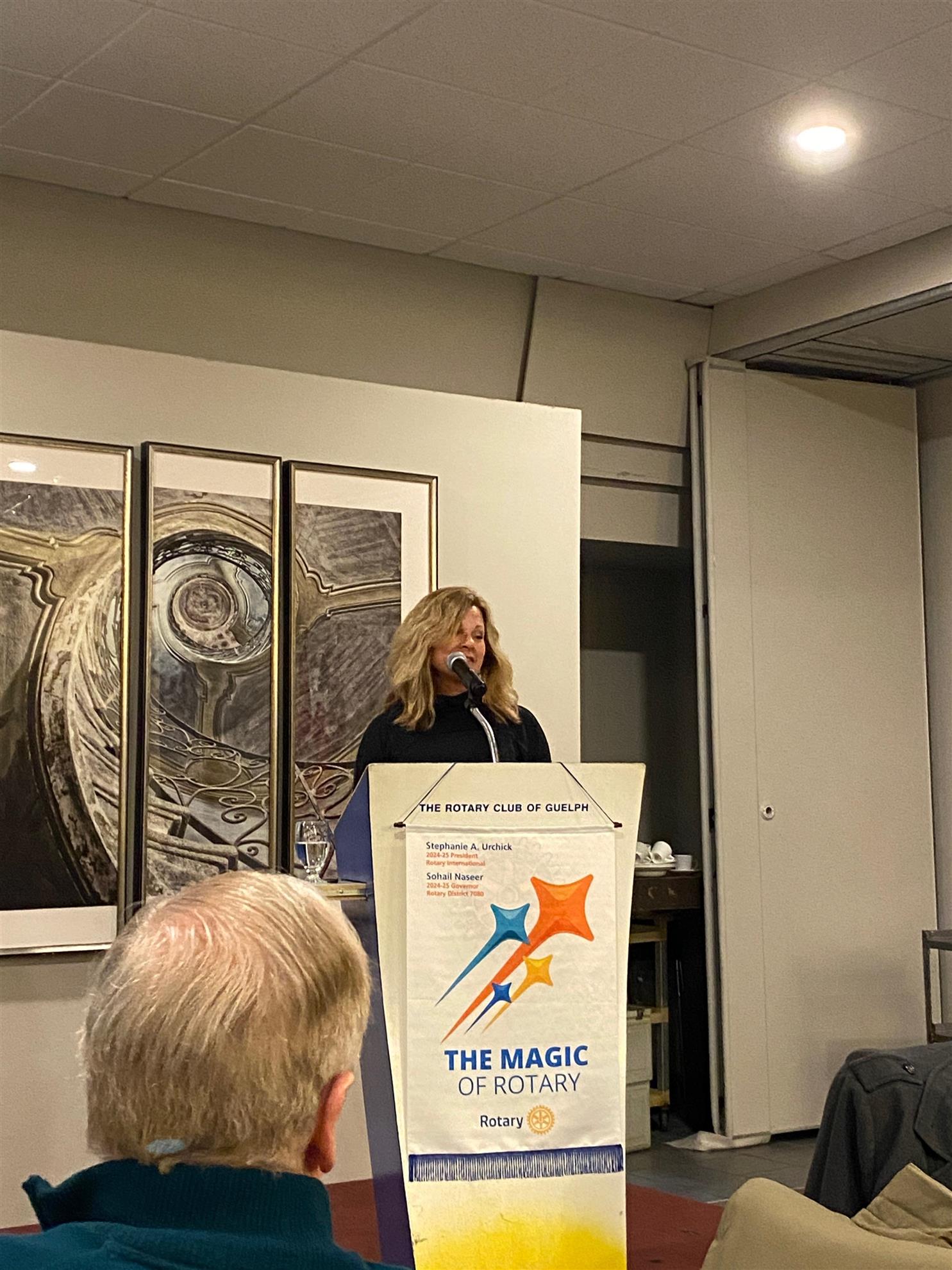
Following lunch, Tracey introduced our guest Philip Maher. She began, "from Chernobyl to Rwanda...Philip has worked as a photo journalist and a communications media specialist for a variety of international aid organizations, traveling to more than 85 countries.
"Most recently, he turned from Angola and Burkina Faso, where 1 million citizens are displaced as a result of extremists destabilizing their country. He lives in Guelph with his wife, Betty, who is a musician in Guelph and has two grown children."
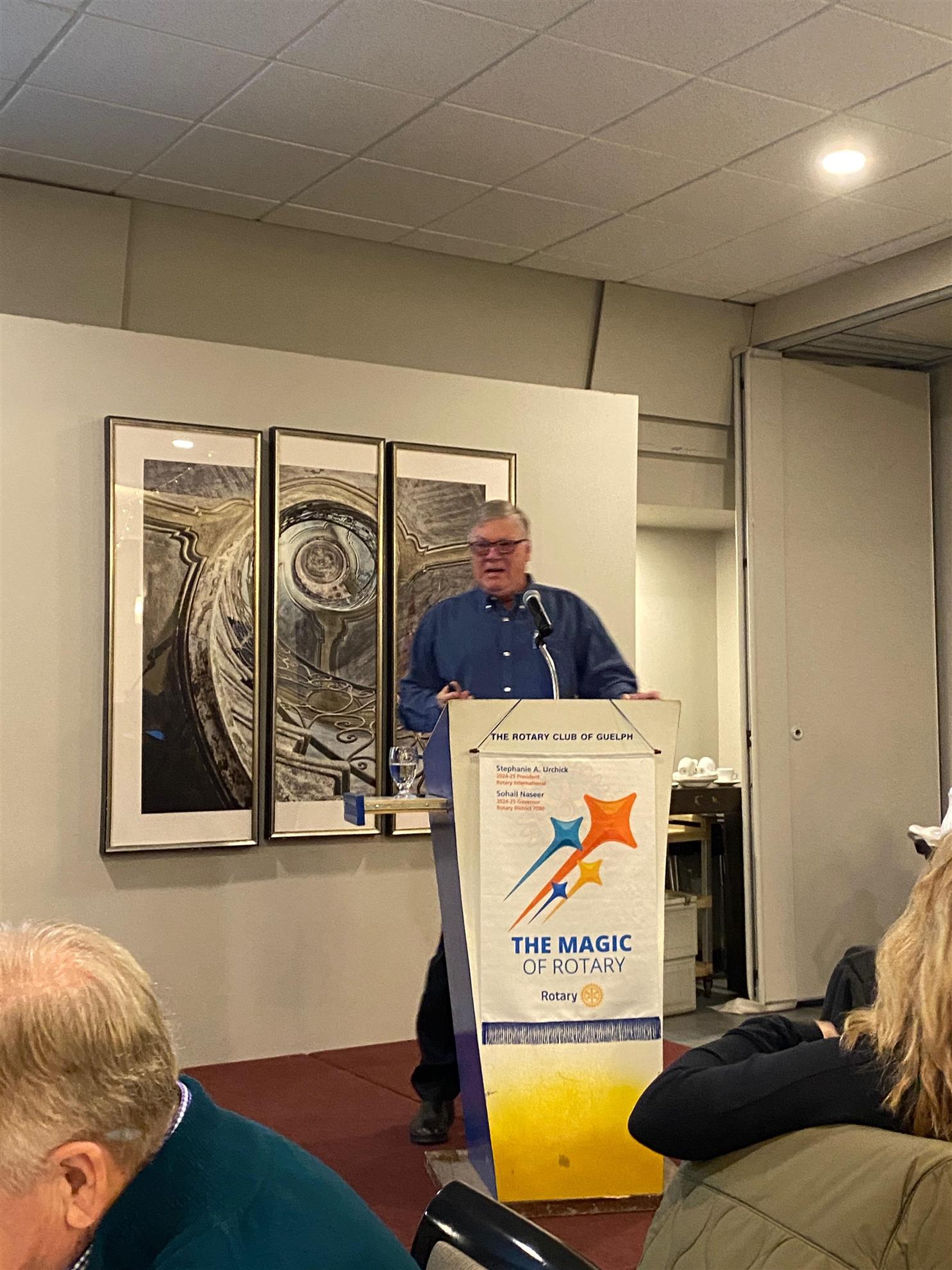
After her official introduction, Tracey explained how she knows Philip. Tracey met Philip around 13 years ago through Bracelet of Hope. Since the she has worked with Philip on a number of initiatives in places like Lesotho. Philip, She explained, is "funny...humble, incredibly kind and such a great person." Tracey then welcomed Philip up to the Podium.
Philip thanked Tracey for the introduction. He then explained that he has worked with a number of different organizations traveling around the world. He worked mostly as a communication specialist, which meant crisis communications, crisis strategies, as well as a photographer so they could have pictures for their websites and reports. Any vehicle of communication you can think of were used to get the message out.
Philip quickly realized that photo journalism was the job he was made to do. "I loved every minute of the craziness," he said, "and it was pretty crazy sometimes."
One of the areas that he worked in was Northern Uganda during the time of the Lord's Resistance. This was a civil war fought between the Ugandan Government and a general named Joseph Kony. Kony would kidnap Ugandan children and turn them into child soldiers.
Philip and the group he worked for ran a demobilization Center for the children that escaped. Reintegrating them back into Ugandan society was a long process that took care and time.
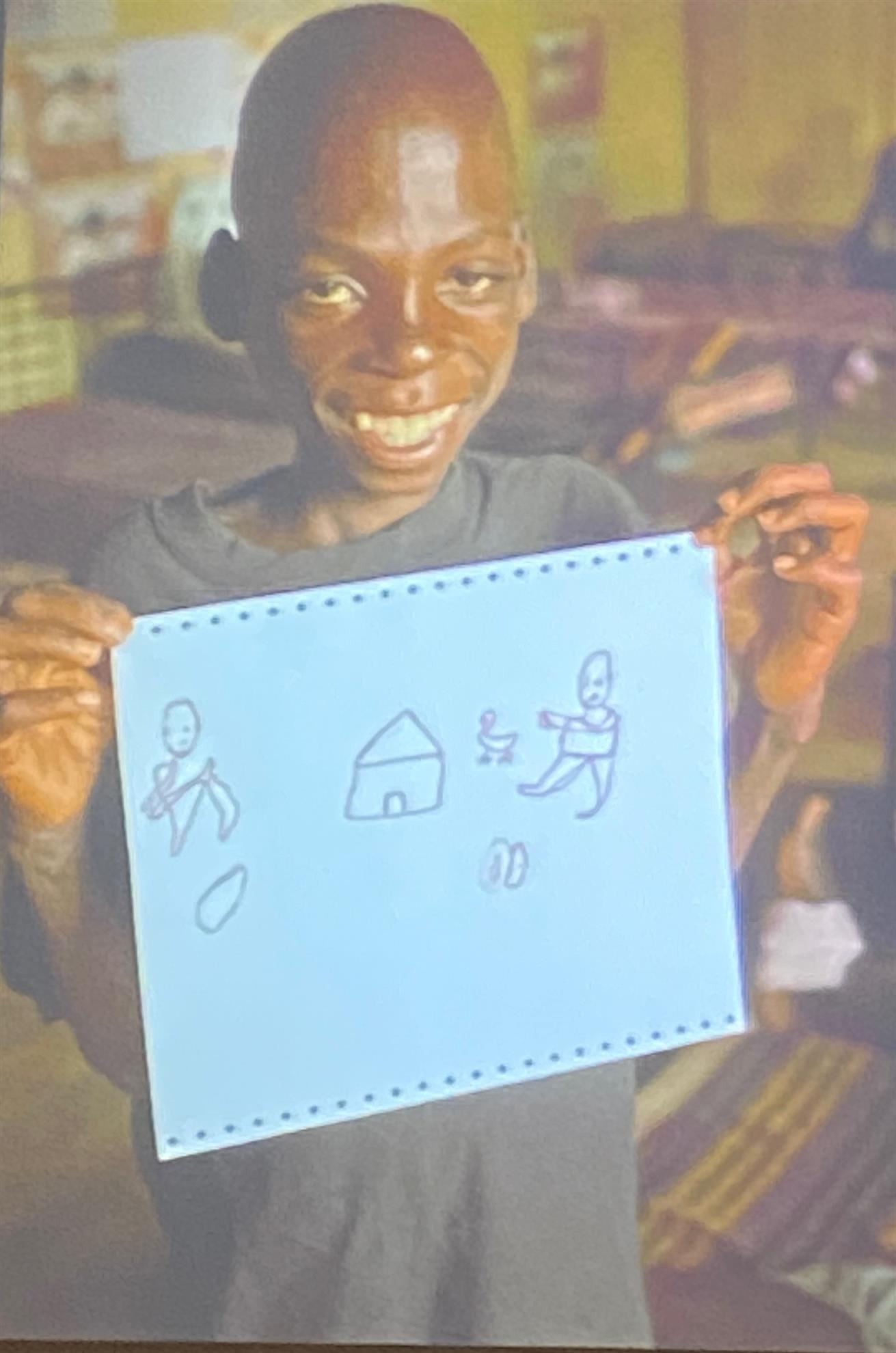
The little boy in the photo above had come out of the bush only a few days before. Philip said, "you can see he's hungry, he's a skeletal image. And the stories that they tell of these kids living through wars and being used basically as cannon fodder was shocking."
When asked to draw a picture, likely one of the first times he ever used a crayon or writing utensil, he drew the house where he lived before he was captured and him, on the left, holding a gun.
This boy would end up telling Philip how he escaped and how he was chased by soldiers.
Of course, it wasn't just the boys that were kidnapped, but the girls as well. The girls would become the "wives" of the offices who could sometimes be 40 years their senior. They would be raped and treated horribly but some of them would escape.
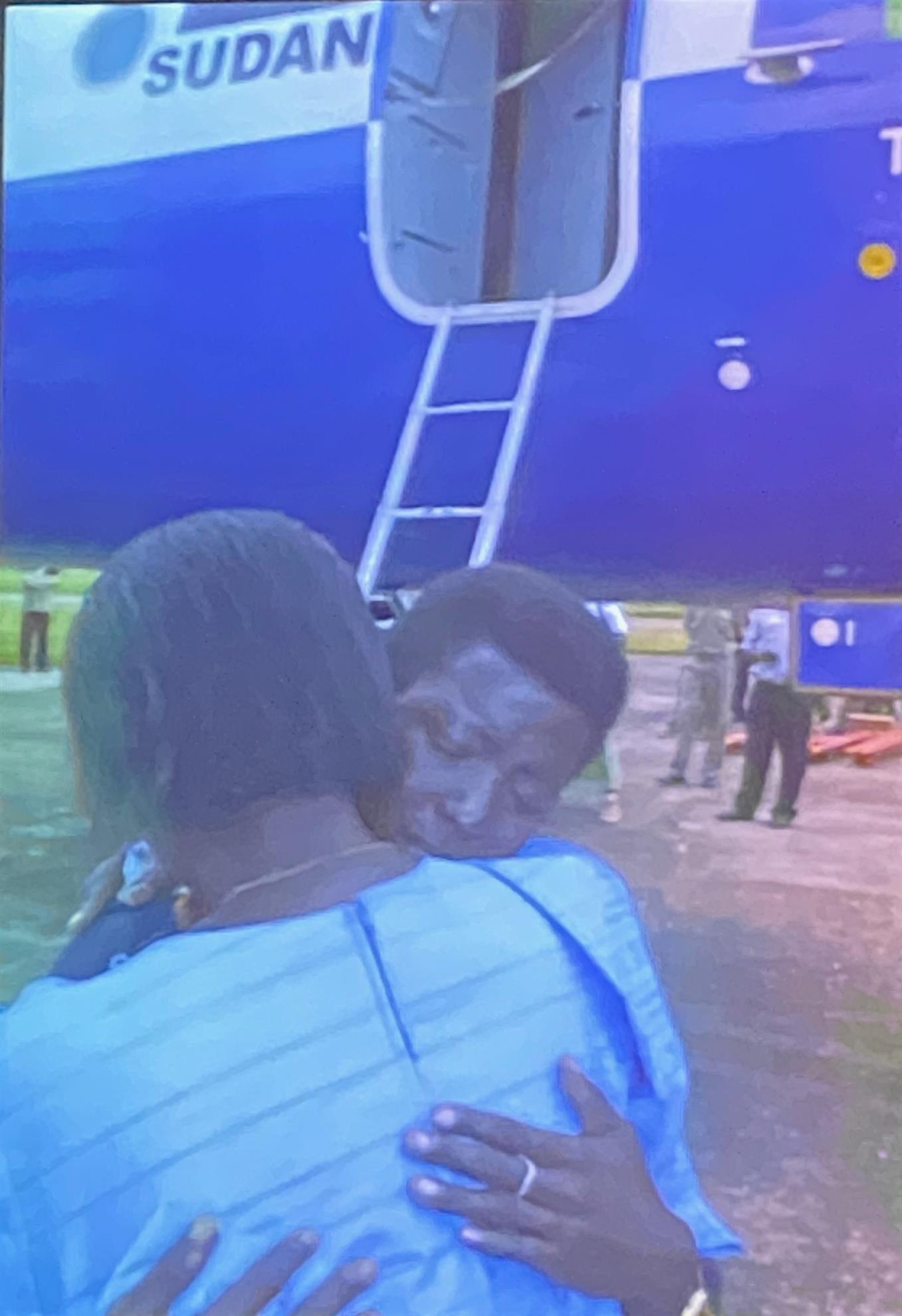
"And this girl here," Philip said pointing to the image above, "the woman wearing the light blue. That's the mother of the girl." The mother was one of the counselors at the demobilization center, and she had been looking for her daughter, who was kidnapped 10 years earlier.
While counseling the young girls that escaped she would ask if they had seen her daughter. "And every once in a while, somebody would say, Yes, I think your daughter is still alive," Philip said.
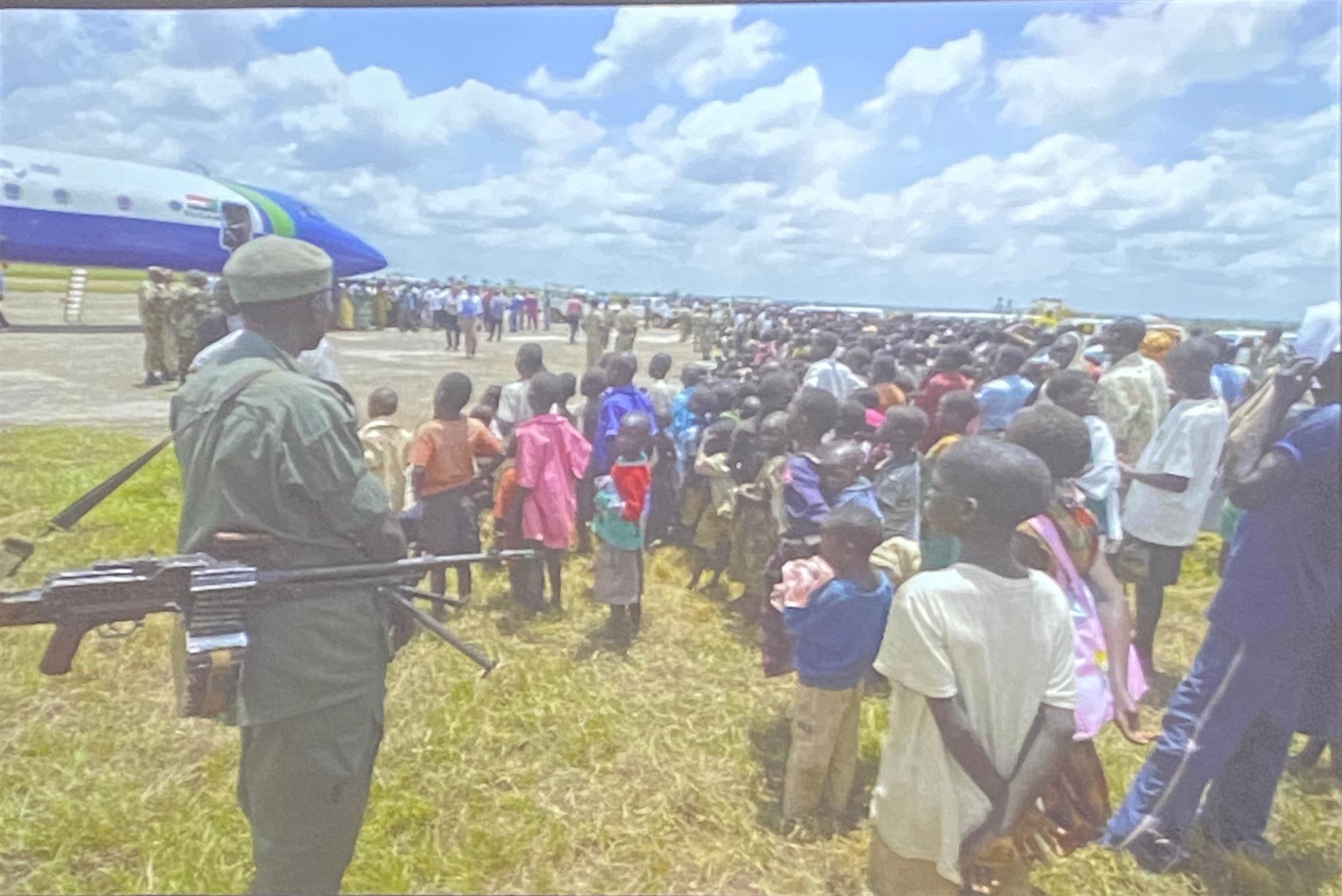
Philip was there when the Sudanese government flew back all the children they had found from the Lord's Resistance Army. Parents, after the planes landed, would fall onto the tarmac and start praying and thanking God that their children had come back. One of these children was the daughter of the counselor. They were finally reunited after 10 years.
The photo above shows all the children and families reuniting.
Philip then discussed the Lost Boys of South Sudan and the journey to refugee camps in Kenya. He also described how food was distributed using C-130 Hercules airplanes and how they had to build bomb shelters due to bombings run by the government.
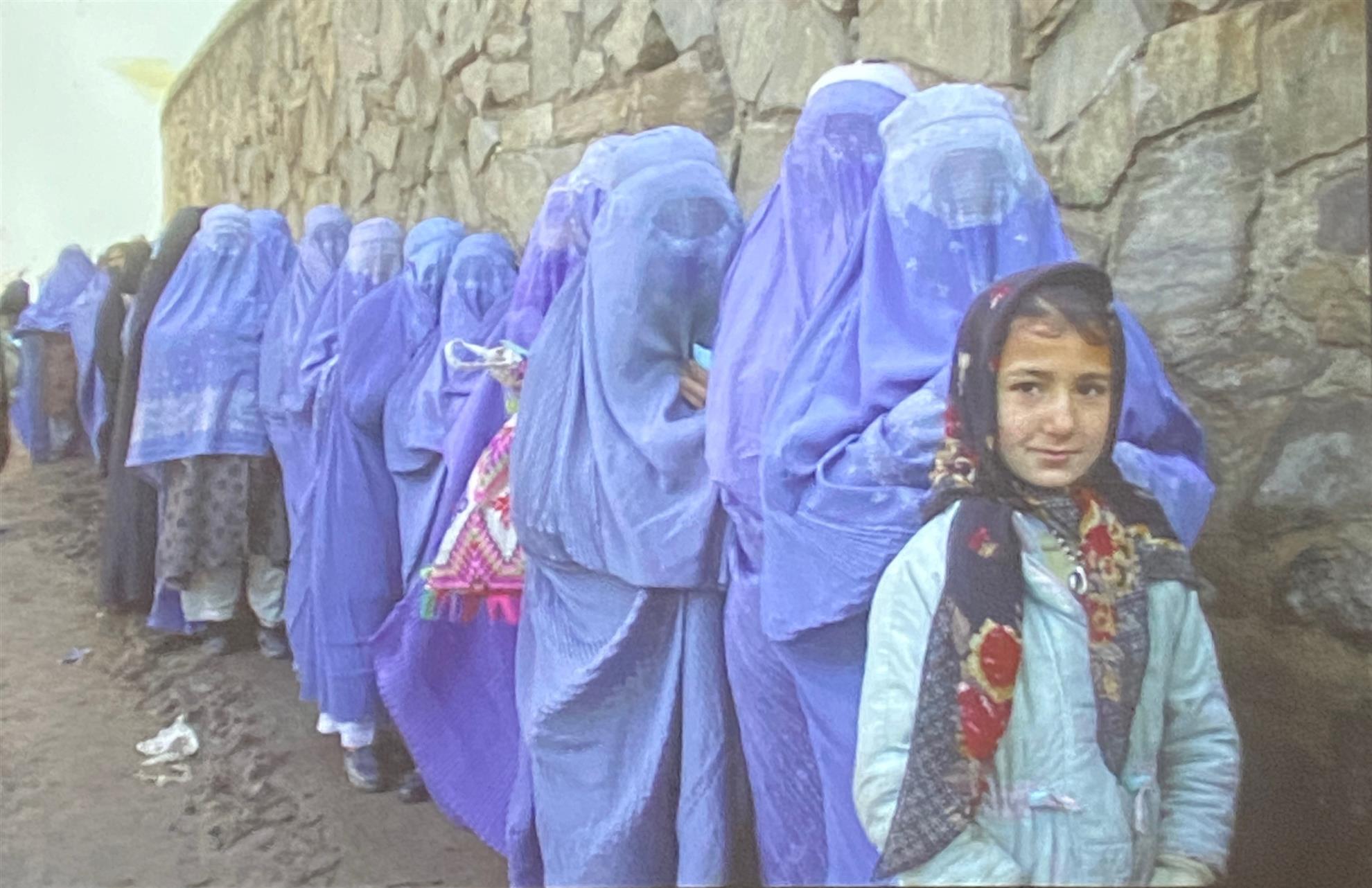
Philip then moved on to a discussion of food insecurity. Philip discussed his work in Afghanistan shortly after the Taliban regime fell. He helped trained teams of Afghani women to go door to door to determine the quantities of food each household required. It was likely the first paid job these women ever had.
Then the women would come to a stadium in the center of the city to receive their alotements of food.
The picture above shows women and girls waiting to receive, rice, wheat, and other food that was available.
As they as they left the stadium, there would be people outside with wooden wheelbarrows, and for a small amount of money they would wheelbarrow bags of rice or wheat home for the women.
One of the things that happens in these situations," Philip explained, "is that you do end up with... holes in [the bags], and so a small amount of the wheat would fall out." Desperately hungry individuals would scoop up, and sometimes even individually pick, morsels of wheat or rice to bring home to their families.
Philip then shared a moving story about a nurse, he worked with, from Alaska that held a starving Somalian man who stumbled into their food centre. He was skin and bones and so weak that he fell to the ground. This nurse picked him up and held him in her arms.
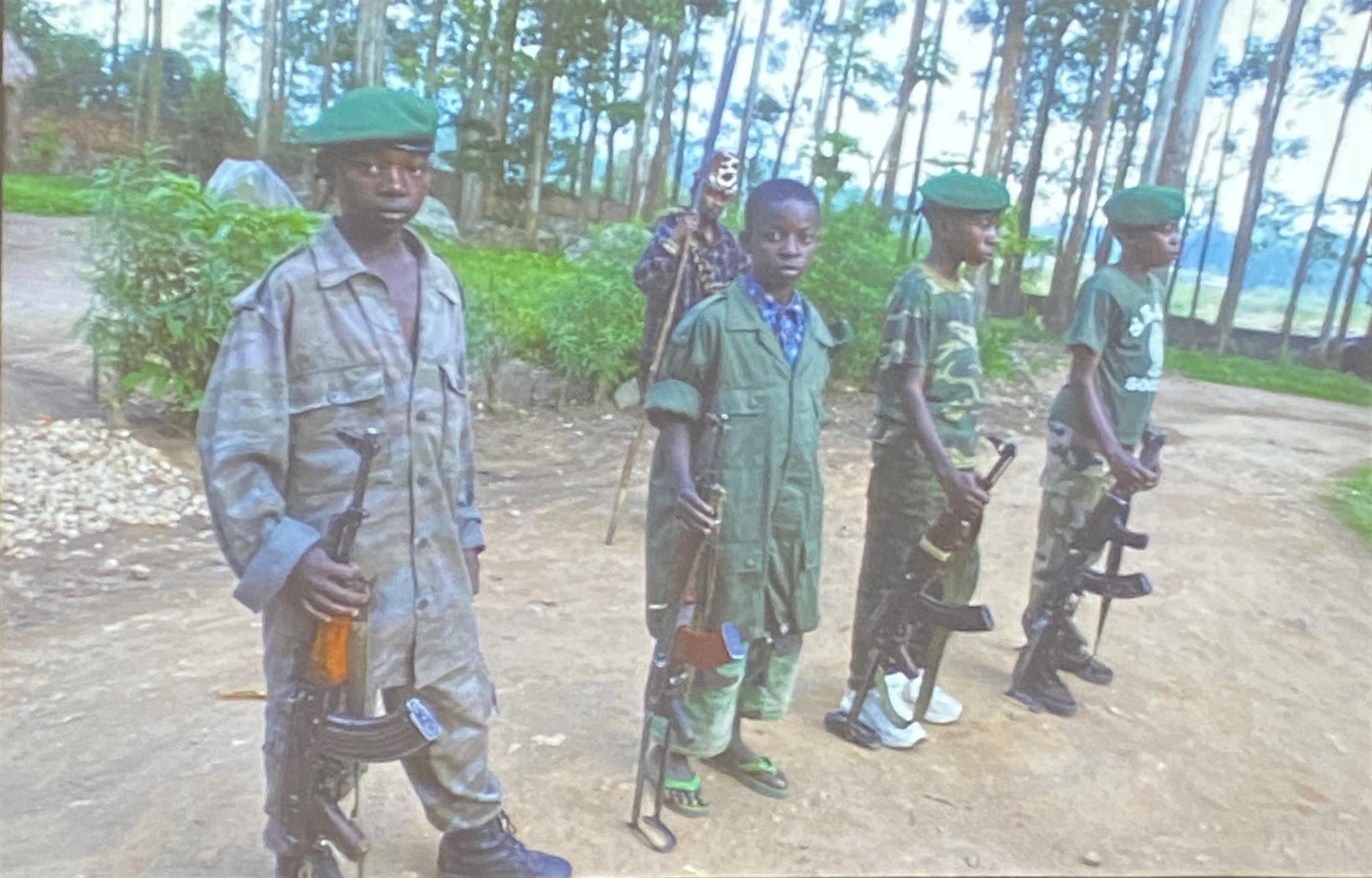
Philip moved on to a story about how he negotiated his way into a camp, with cigarettes, to see child soldiers in the Congo.
In the Congo, Philip worked with an organized that helped children escape these military camps and helped to rehabilitate them into their communities.
He explained how incredible it was to see children who, several days prior, had been child soldiers, playing soccer of learning in a classroom.
Philip then discussed how he worked on a project that helped educate the children of sex workers in India as well as the Gujarat earthquake and how devastating this was for children.
He then shared a story of a girl from Albania who drew a picture of he house on fire because that was the state her house was in when she last saw it.
Philip shared more stories on top of this including a woman mourning the death of her son after a tsunami struck India.
Near the end of his presentation, Philip reflected on the lessons he's learned. The biggest being how important it is to forgive others.
On this note he shared a story about a man who had killed the son of a woman and cut her hand off during the Rwandan genocide. After the war, this man sought the woman out and begged forgiveness. She accepted. Now the two of them work together building houses for impoverished Rwandans.
As Rotarians this is a lesson we should all take to heart, especially during the times we live in.
After Philip concluded his presentation, Jules thanked him and presented him with our club's Speaker Certificate. In his honour, we have inoculated 50 children against Polio.
As there was nothing more for the good of Rotary, President Martin concluded the meeting.
Notes taken by Otter.ai., formatted and edited by Aidan Harris.




.png)